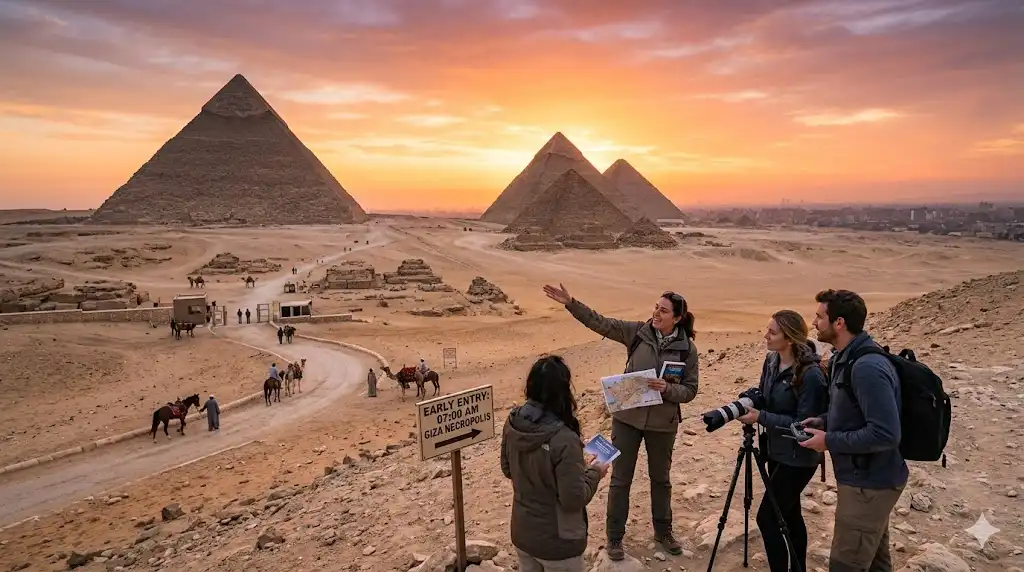
best place to stay in egypt for pyramids is usually Giza, near the Giza Plateau, if your priority is an early start and the option of a true “pyramid view.” Staying close means less time in traffic and more control over your morning schedule. Many first-time visitors find this reduces stress, especially on a short trip.
If your plan is mostly museums, neighborhoods, and restaurants in Cairo (and only one day at the pyramids), Downtown Cairo or Zamalek can be a more convenient base. You trade “close to the pyramids” for easier day-to-day city movement, then visit Giza as a focused day trip.
⚠️ Safety Notice (At the time of writing…)
At the time of writing, safety guidance for Egypt can change, including which areas governments advise avoiding and what precautions travelers should take. Before booking accommodation, check your government’s latest travel advice and follow it during your trip. The UK Foreign, Commonwealth & Development Office (FCDO) publishes Egypt travel advice with safety and security guidance, entry requirements, and legal differences.
For travelers using US guidance, the US State Department also publishes an Egypt travel advisory page. Use these sources to confirm any updates that could affect your itinerary, transport plans, or late-night movement in Cairo. Always prioritize licensed transport, keep valuables discreet, and avoid sensitive areas highlighted by your government advisory.
At a Glance: Fast picks + budget table
If the pyramids are the main reason for the trip, pick Giza and keep mornings simple. If Cairo is the main plan and the pyramids are “one big day,” pick Downtown Cairo or Zamalek and schedule Giza early.
Fast picks
- Best for pyramid views + early entry: Giza (Nazlet El-Semman / Sphinx side or the Pyramids Road area)
- Best for “Cairo city time” every day: Downtown Cairo / Tahrir
- Best for calmer evenings (still central): Zamalek or Garden City
- Best if you want modern space and do not mind distance: Sheikh Zayed / 6 October (plan transport)
A realistic daily budget varies by season, hotel type, and whether you hire private transport. This table helps you plan a mid-range first trip without over-optimism.
| Budget level | Hotel (per person/day) | Local transport | Food & water | Tickets/activities | Estimated total/day |
|---|---|---|---|---|---|
| Budget | $20–45 | $6–15 | $10–20 | $10–25 | $46–105 |
| Mid-range | $50–120 | $12–30 | $18–35 | $20–45 | $100–230 |
| Comfortable | $130–260 | $25–50 | $30–65 | $30–80 | $215–455 |
Exchange rates fluctuate — verify current rates before travel.
Best place to stay in Egypt for pyramids: Giza vs Downtown Cairo (what to choose)
Direct answer: choose Giza if you want the easiest pyramid morning and a realistic chance of a true view; choose Downtown Cairo/Zamalek if you want a smoother “city-first” experience and will visit the pyramids as a single day trip.
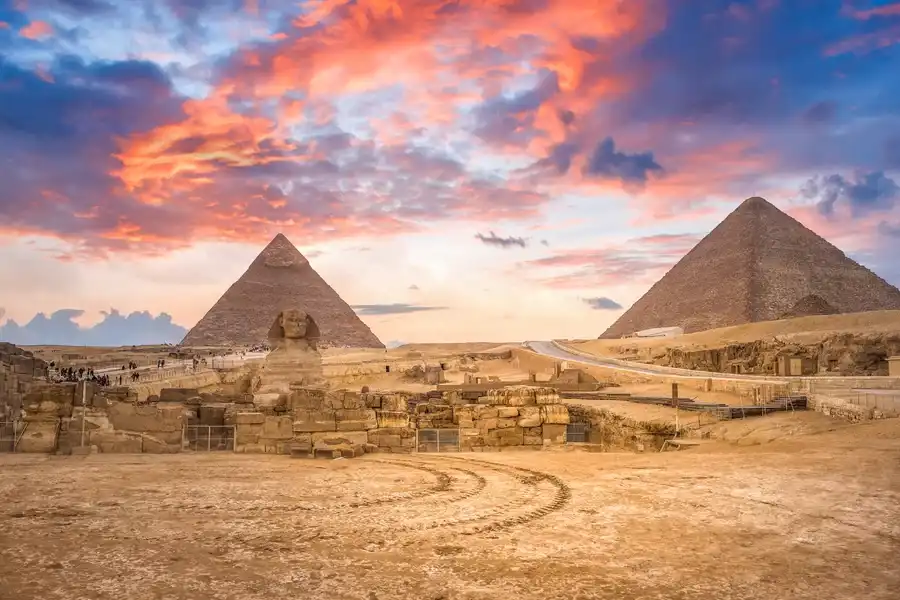
When Giza is the better base
Giza makes sense when you want to:
- Enter early and avoid the heaviest queues and traffic.
- Return to the hotel mid-day for rest (useful in hot months).
- Book a room or rooftop with a clear pyramid line-of-sight.
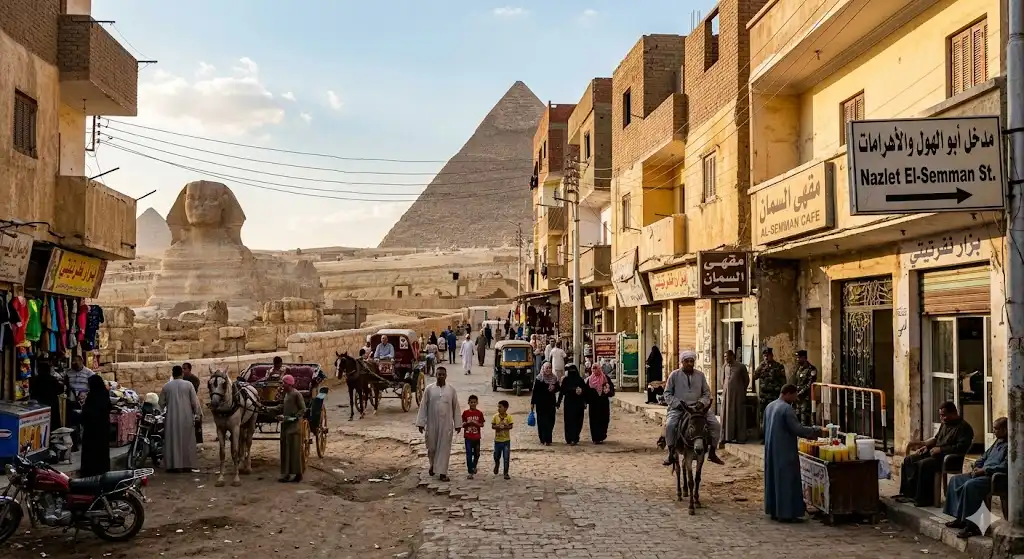
Traveler listings show many stays clustered very close to the plateau, including around Nazlet El-Semman (near Sphinx Square / Abu El Hol streets). That location is convenient, but it can feel busy and touristy, so hotel quality and access matter more than the neighborhood name.
When Downtown Cairo (or Zamalek) is the better base
Cairo areas work better when you:
- Plan daily museum visits, markets, and neighborhoods.
- Want more restaurant choice within walking distance.
- Prefer a city-hotel feel over a plateau-adjacent tourist zone.
Many “where to stay in Cairo” guides for first-timers recommend Downtown for central sightseeing, with Zamalek and Garden City as calmer alternatives. You can still do the pyramids easily—just accept that traffic will shape your departure time.
The “pyramid view” reality
A “pyramid view” label can mean:
- A full view from your room window or balcony, or
- A partial view, or
- A rooftop-only view that depends on seating and buildings.
Use guest photos and map location to confirm what you are buying, especially in the budget and mid-range categories where rooftops are a common feature.
Best areas to stay near the Giza Pyramids (4 practical zones)
These are practical “where to base yourself” zones, not a promise that every street is the same. Pick the zone first, then choose a hotel with strong recent reviews and clear photos.
1) Nazlet El-Semman / Sphinx side (closest “walkable” feel)
This area is popular because it is near the Sphinx side and many small hotels promote rooftop breakfasts with views. Traveler hotel listings show multiple properties with addresses around Nazlet El-Semman and Sphinx Square/Abu El Hol streets, usually within a short drive (or brisk walk, depending on exact spot) of entry points.
Pros: early starts are easier; many rooftop options; quick return for rest.
Cons: can be crowded; street noise can affect sleep; pickup points may be tight for cars.
If the trip is short (2–3 nights) and the pyramids are the main goal, staying here for at least one night is often the simplest plan.
2) Pyramids Road / Remaya Square corridor (good access + simpler pickups)
Hotels along the broader Pyramids Road area can give easier vehicle access than small side streets, which matters if you are coordinating airport pickup, a private driver, or early departures. It also positions you well for the Grand Egyptian Museum (GEM), which is in Giza and described by GEM’s official FAQs as located near the pyramids at El Remayah Square along the Cairo–Alexandria Desert Road.
Pros: smoother vehicle logistics; convenient for pyramids + GEM days.
Cons: “pyramid view” is less guaranteed; some hotels are set back.
This corridor works well if your trip includes both the plateau and the museum and you want predictable morning transport.
3) King Faisal / Al Haram corridor (value-focused, still practical)
Faisal Street and the Al Haram corridor can offer better prices and more apartment-style stays while staying within reasonable reach of the plateau. Traveler discussions often frame this as a “value” choice: not as instantly close as Nazlet El-Semman, but workable if you are comfortable taking a short ride to entrances.
Pros: better value; more local feel; easier access toward Cairo routes.
Cons: longer morning ride; views are rarer; you need transport planning.
This is a good fit when your budget is mid-range and you want space, but still want Giza as your base.
4) Sheikh Zayed / 6 October (quiet, modern, but farther)
Some travelers prefer more modern neighborhoods with larger hotels and quieter streets. The trade-off is distance: you will rely on a car to get to the plateau and to Downtown Cairo, so timing becomes the main challenge. Cairo guides often list these as modern, quieter options, but not the most efficient choice for quick pyramid access.
Pros: calmer nights; larger rooms; modern services.
Cons: more time in transit; early departures matter more; less “pyramid atmosphere.”
Choose this only if quiet and modern comfort outweighs proximity.
Best areas in Cairo if your plan is “city + pyramids day”
If you will spend most days in Cairo, these areas reduce daily friction.
Downtown Cairo / Tahrir (best for first-timers who want central access)
Downtown is frequently recommended for first-time visitors because it is central for city sightseeing and has a wide range of hotels and budgets. It is also practical for walking to restaurants and arranging transport. The downside is traffic and noise in some streets, so a well-reviewed hotel with good window insulation matters.
Zamalek (calmer feel with strong dining options)
Zamalek is popular for a calmer, residential feel and easy dining. It is not close to the plateau, so plan your pyramid day as an early start with a driver or pre-arranged car. This works well if you value evening comfort more than a pyramid view.
Garden City (central, quieter pockets)
Garden City is often chosen for a calmer tone while staying close to central Cairo. It can be a good compromise if you want to be near Downtown without being right in its busiest streets.
Heliopolis / near the airport (best if you have early flights)
If your trip involves an early departure or late arrival, staying closer to the airport can reduce stress. It is not efficient for daily pyramid access, so it works best when the pyramids are a single planned day rather than the focus every morning.
How to pick the right hotel for pyramid access (checklist)
The right hotel is the one that supports your schedule. Use this checklist before booking.
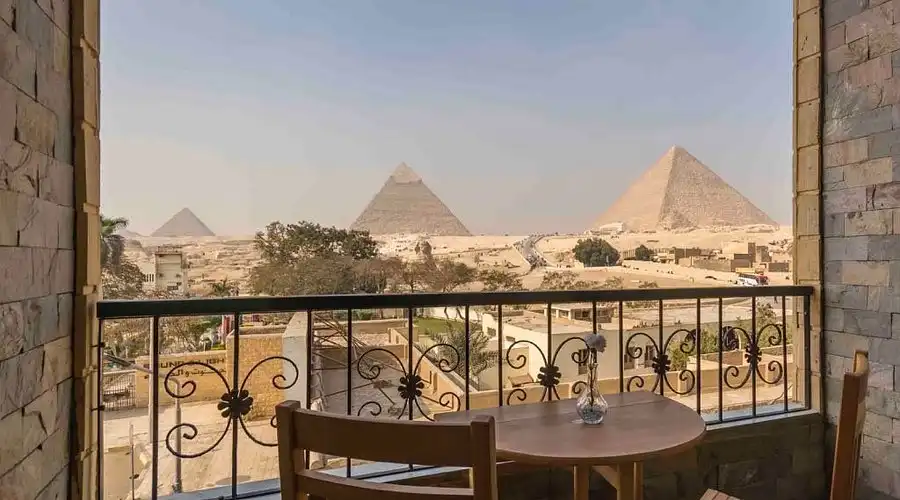
1) Confirm what “view” means
- Ask if the view is from your room or only from the rooftop.
- Request a room category name (not just “pyramid view”).
- Check guest photos for the exact angle and building obstructions.
Lists of hotels near the pyramids show many properties advertising views, but the experience varies widely by floor and orientation.
2) Protect sleep quality
In plateau-adjacent areas, street noise is common. Prioritize:
- Good windows and air-conditioning.
- Reviews mentioning quiet nights.
- A room not directly facing the busiest street.
Good rest is not a luxury in Cairo—your pyramid day starts early.
3) Make transport easy
Ask:
- Can a car stop at the entrance safely?
- Can the hotel help coordinate a reliable pickup time?
- Is there a clear landmark for drivers?
Small streets can be confusing for first-time visitors, so a simple pickup point reduces delays.
4) Choose flexible payment and cancellation
If your plans depend on museum opening schedules or flight timing, flexibility matters. Confirm:
- Cancellation deadline.
- Whether payment is charged immediately.
- Card vs cash expectations at the property.
Getting around: real travel times + timing tips
Traffic is the main variable. Even a short distance can take longer at peak times.
This table provides planning ranges (not guarantees). Add buffer time if you travel during rush hours.
| Start point | To Giza Pyramids | To Grand Egyptian Museum (GEM) | Notes |
|---|---|---|---|
| Giza (Nazlet El-Semman) | 5–20 min | 15–30 min | Close to plateau; street access varies |
| Giza (Pyramids Rd/Remaya) | 10–30 min | 10–20 min | Strong option for “Pyramids + GEM” days |
| Downtown Cairo | 45–90 min | 45–85 min | Plan early departure for pyramids day |
| Zamalek | 50–95 min | 50–90 min | Comfortable base; longer pyramid commute |
Entrances and route planning
Entrance logistics can affect your morning. Some planning resources compare the main/visitor gate and the Sphinx gate, suggesting you choose based on whether ticketing convenience or Sphinx photography is your first priority.
If you are staying in Nazlet El-Semman, you may be closer to the Sphinx side. If you are staying along Pyramids Road/Remaya, the “main/visitor” approach may be simpler for drivers. Confirm current routing with your driver the day before.
Budget & costs for staying near the pyramids
Hotels with real pyramid views can cost more than similar-quality rooms without views. Sometimes the “view premium” is the biggest part of the price difference, not extra comfort. Expect higher rates during peak seasons and holiday weeks.
Common extras to plan for:
- Private transport: easier mornings, especially for first-time visitors.
- Small tips: for drivers, hotel help, and service staff.
- Water and snacks: the plateau is exposed to sun and walking.
At the time of writing, costs vary widely based on season and hotel category, so treat price ranges as a planning tool, not a fixed promise.
Private day experiences that reduce stress (examples)
A structured private day can make the “pyramids day” feel calmer, especially if you are staying in Cairo and commuting.
- A private Giza Pyramids Half Day Tour can work well for early mornings when you want the key sights without a long day.
- A sunrise or sunset desert viewpoint experience like the Pyramid Desert Trip by Horse or Camel is useful if you want a simple plan with a fixed start time.
- If you want “pyramids beyond Giza,” a day such as Memphis, Saqqara & Dahshur Day Tour can fit well after your main plateau visit.
Food & drink near the pyramids (safe choices)
Near the plateau, keep food choices simple and predictable. A long pyramid morning is easier with light breakfast, bottled water, and snacks you trust. If you plan rooftop dining, check recent hygiene-related reviews and choose places with consistent turnover.
For practical food ideas, typical prices, and safety guidance for first-time visitors, use Best Egyptian Food: A Practical Food Guide for Tourists as a planning reference.
SIM/internet: what matters for your stay
Do not assume hotel Wi-Fi will be strong in every room. A local SIM with data helps with:
- Maps and traffic estimates
- Driver coordination
- Quick translation and confirmations
When choosing accommodation, prioritize properties where reviews mention stable Wi-Fi and responsive reception. Even with a SIM, strong hotel support matters if you need a pickup early in the morning.
Sample 2–3 day itinerary focused on the pyramids
2-day plan (pyramids-first)
Day 1: Giza Plateau early
Start early, choose your entrance based on your route, and focus on the main pyramids and the Sphinx. Keep mid-day flexible for rest if you are staying nearby.
Day 2: GEM (or Cairo city day)
The Grand Egyptian Museum is in Giza near the pyramids, so pairing it with a Giza stay can reduce transit friction. If your trip is city-focused, do this as a full Cairo day instead.
3-day plan (add “beyond Giza”)
Day 1: Giza Plateau early.
Day 2: GEM or Downtown Cairo museums.
Day 3: Saqqara/Dahshur style day. For decision-making and expectations, use Three Pyramids Tours Egypt: How to Choose Safe, Smart Pyramids Tours to match pace, comfort, and timing to your group.
Frequently Asked Questions
What’s the best area to stay for visiting the Pyramids of Giza?
For most first-time visitors who want the pyramids to be easy and early, Giza is the best base because it is closest and often offers hotels with views. If you want more restaurants and a city stay, Downtown Cairo is a practical alternative, but you will commute.
A simple approach is to split nights: one night in Giza for the “pyramid morning,” then move to Cairo for city days. This reduces daily transport stress without over-complicating the trip.
Is it better to stay in Giza or Cairo?
Stay in Giza if you want: early entry, less traffic pressure, and a chance of a real view. Stay in Cairo if you want: walking access to city restaurants and museums, and you are fine making the pyramids a single dedicated day.
If your schedule includes the Grand Egyptian Museum, Giza becomes even more practical because GEM is located in Giza near the pyramids.
Is staying near the pyramids safe?
Many travelers stay near the plateau without issues when they choose well-reviewed properties, use reliable transport, and follow common-sense precautions. The main challenge is not usually “danger,” but managing crowds, avoiding scams, and keeping valuables secure.
At the time of writing, always check your government travel advice for current updates before booking and follow it during your trip.
How far is Downtown Cairo from the pyramids?
Distance on a map does not reflect travel time. From central Cairo areas, travel time commonly ranges from roughly 45–90 minutes depending on traffic and timing. Leaving early in the morning is the biggest factor you can control.
If you are sensitive to long car rides or traveling with children, staying in Giza can make the day feel much easier.
Does “Pyramid View” mean a clear view from the room?
Not always. It can mean a rooftop-only view, a partial view, or a room view that depends on floor and direction. Confirm view details in writing, check guest photos, and ask exactly where the view is from.
If the view is the main reason for the booking, choose a property where many recent guest photos show the same angle you want.
Which entrance should you use for the Giza Plateau?
Some planning resources describe choosing between a main/visitor gate and a Sphinx gate based on what you want first (ticketing convenience versus Sphinx photography priorities). Your hotel location and driver route often decide what is easiest.
If you are staying close to the Sphinx side, that route may feel more direct. If you are coming from Remaya/Pyramids Road, the main/visitor approach may be simpler. Confirm routing the day before.
What is the best time of year to stay near the pyramids?
Comfort depends heavily on weather, crowd patterns, and daylight. For seasonal planning guidance, use Best Time to Visit Egypt: Weather by Season and Region and match it to your pace and heat tolerance.
Even in cooler months, mornings can be busy, so early starts remain valuable.
Do you need a visa to visit Egypt?
Visa rules depend on nationality and can change. At the time of writing, the official Egypt e-Visa portal is the correct starting point to verify requirements and apply if eligible. Always confirm requirements before booking flights. (Official link in the resources section.)
Where can you see official information about the pyramids and nearby heritage sites?
For official and non-commercial background, UNESCO’s listing for “Memphis and its Necropolis” is a reliable reference for the broader heritage context that includes Giza and Saqqara. (Link in the resources section.)
Suggested External
UNESCO — Memphis and its Necropolis